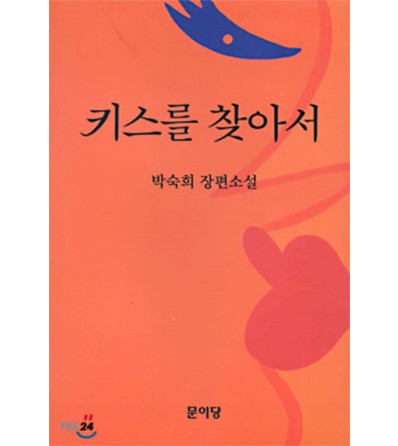
Park Suki began her literary career in 1995,
winning the Hankook Ilbo New Year's Literary Contest. She has published
numerous works, including the novels Cheerful Madness, In Search of a
Kiss, The Selfish Gene, Sartre Needed Three Women, and I’m
Not Ready to Go Home Yet. She has also released an art essay titled You
Are an Artist. Since her first exhibition in 2014, she has held ten solo
exhibitions and is active as a painter.
This novel is a reimagining of the love
that shaped the life of Sartre, a 20th-century intellectual giant, philosopher,
novelist, and critic, whose thoughts guided people around the world. Through
the eyes of his lover, Dolores, the novel explores Sartre’s love and quest for
freedom through his relationships with three women: his lifelong companion and
necessary love, Simone de Beauvoir; the symbol of youth, Olga; and Dolores
herself, as the pursuit of beauty. Sartre’s love was an endless quest for
freedom and a constant choice.
In Sartre Needed Three Women, Park Suki
contrasts ordinary, conventional love with idealized, conceptual love, dealing
with the theme of love's loss and recovery. The protagonist is Dolores Vanetti,
an American woman who became Sartre’s lover and confidant from 1945 for the
next five years. Sartre met her in January 1945 while stationed in the United
States as a correspondent for the Combat newspaper at Albert Camus'
request. He declared her his greatest lover since Beauvoir and passionately
professed his love for her.
Their love lasted for five years. But when
Dolores settled in Paris and realized Sartre could not give her the time she
deserved due to his commitments to Beauvoir and another lover, she felt
humiliated and ended the relationship.
The novel begins when Dolores arrives in
Paris to start her life with Sartre. She soon realizes the reality of her
relationship as she meets Sartre’s circle of friends and discovers the truth
about his love life. Believing she was Sartre’s one and only, she is shocked to
learn that Sartre always needed three women in his life.
Dolores's view of love is portrayed as
deeply traditional and ordinary, seeking to find fulfillment and stability in a
passionate, unified relationship. On the other hand, Sartre’s idealistic and
conceptual love is shown as a contradiction, a world full of lies. This
unfulfilled love demands Dolores to make difficult decisions about her life.
Author’s Note
When it comes to Sartre's love story, Simone de Beauvoir is likely the first
person that comes to mind. But I found little interest in the love between
them, which everyone knows about. Despite the somewhat unconventional idea of a
marriage contract, their love seemed too textbook-like for me.
Instead, I wanted to write about a
lesser-known love story of Sartre, and in my research, I stumbled upon a woman
named Dolores Vanetti. Something about her sparked my imagination. Of all the
various types of love Sartre experienced, his love with Dolores seemed the
closest to ordinary and conventional love, which intrigued me.
Whether a love that involves reason or
ideology is true love, I don’t know. But I do know that such love lacks
honesty. Even if Sartre and Dolores’s love wasn’t ideal, no one can deny its
honesty. So I dared to imagine: “Despite all his romantic entanglements, could
it be that Dolores Vanetti was the one who truly made Sartre experience love?”
For these reasons, Dolores Vanetti became
the protagonist and narrator of my novel. She was the one woman who made Simone
de Beauvoir feel most threatened by Sartre’s affections.
The records of their love, which began when
they met in 1945 and ended in 1950, are only briefly mentioned in Sartre’s
biographies. Therefore, this novel, while based on some historical facts, is
largely a work of fiction.