BOOKS

Long Novel
Cucumber and Violin
Park Suki
AUTHOR INTRODUCTION
Park Suki began her literary career in
1995, winning the Hankook Ilbo New Year's Literary Contest. She has
published numerous works, including the novels Cheerful Madness, In
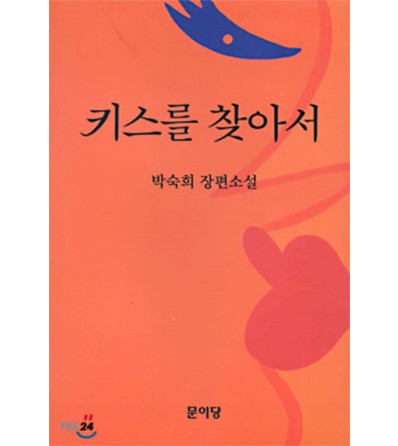
Search of a Kiss, The Selfish Gene, Sartre Needed Three Women,
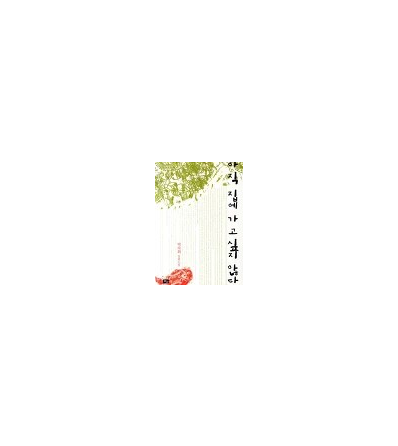
and I’m Not Ready to Go Home Yet. She has also released an art essay
titled You Are an Artist. Since her first exhibition in 2014, she has
held ten solo exhibitions and is active as a painter.
BOOK INTRODUCTION
A Record of the Intimate Lives of People
Living in Our Time
Park Suki's novel collection Cucumber and Violin has been published as part of the Blue Thoughts Novel Selection No. 55. This collection features nine stories that delve into various aspects of contemporary society, such as the true value of art, same-sex love, gender discrimination, and issues surrounding pets. The stories portray ordinary people who confront established cultures and customs in their own ways.
The characters in Park Suki's novels include artists (Ha-yeon in "I Just Called," Jang Hyeong-su in "What We Need Is Not Wings," and Yi Sang in "Poet Yi Sang"), but also office workers (Mr. Yeo in "Mr. Yeo"), bar patrons (G and K in "Cucumber and Violin"), urban dwellers (the main characters in "The Conditions of Cohabitation"), and ordinary people (the woman in "That Woman" and the father in "A Very Trivial Death"). Even a dog (the narrator in "I Am Number 2") finds a voice in her stories. Regardless of their status or where they live, these characters, who live in or have lived through the same era, are chosen to be part of her fictional world. They are 'ordinary people' you might encounter anywhere, but at the same time, 'special people' who reveal their value in their unique ways.
Park Suki's storytelling oscillates between 'the ordinary' and 'the special,' offering a reading experience that allows readers to appreciate the 'special' hidden behind the 'ordinary.' This understanding simultaneously reveals that what is 'special' can also be 'ordinary.' Our lives are shaped by this interplay between the ordinary and the extraordinary. The simplicity of this truth often goes unrecognized by the world. Park Suki's novels, with their mix of humor and seriousness, expose the ignorance of those who overlook this fundamental aspect of life. - Excerpt from the commentary by Park Deok-gyu (novelist and literary critic)
Author's Note
While driving on the highway to visit a friend's house in Hongcheon, I saw a van with the words "Emergency Escort, Ministry of Justice" written on its door. Imagining that there might be a man or woman in gray prison clothes with handcuffs inside the van, a sentence suddenly came to mind: "The prelude to hell began with an absurd and surreal story." With this sentence, a new story began to stir in my mind. Many of my novels start from external observations like this, and as I write, I become one with the story. If the story is painful, I feel that pain too, and sometimes I pour my entire soul into a single sentence. The stories I pull from the outside world might actually be my own, secrets I don’t want to reveal. Or maybe, it’s the other way around: I disguise my own stories as someone else’s, using the craft of fiction to hide them. That might be the true nature of the novel as a genre. With a sly smile, sometimes in pain and other times in the throes of passion, I wrote these stories. As I gather them into a book, I find myself reconnecting with you, and with myself, whom I had almost forgotten. These stories, written after my debut in 1995, are both familiar and strange. Each time I finish a story, a part of my life concludes with it, and so today’s me is not the same as the me who wrote those stories. Thus, these familiar yet unfamiliar stories will likely resonate in the same way with others
Park Suki's novel collection Cucumber and Violin has been published as part of the Blue Thoughts Novel Selection No. 55. This collection features nine stories that delve into various aspects of contemporary society, such as the true value of art, same-sex love, gender discrimination, and issues surrounding pets. The stories portray ordinary people who confront established cultures and customs in their own ways.
The characters in Park Suki's novels include artists (Ha-yeon in "I Just Called," Jang Hyeong-su in "What We Need Is Not Wings," and Yi Sang in "Poet Yi Sang"), but also office workers (Mr. Yeo in "Mr. Yeo"), bar patrons (G and K in "Cucumber and Violin"), urban dwellers (the main characters in "The Conditions of Cohabitation"), and ordinary people (the woman in "That Woman" and the father in "A Very Trivial Death"). Even a dog (the narrator in "I Am Number 2") finds a voice in her stories. Regardless of their status or where they live, these characters, who live in or have lived through the same era, are chosen to be part of her fictional world. They are 'ordinary people' you might encounter anywhere, but at the same time, 'special people' who reveal their value in their unique ways.
Park Suki's storytelling oscillates between 'the ordinary' and 'the special,' offering a reading experience that allows readers to appreciate the 'special' hidden behind the 'ordinary.' This understanding simultaneously reveals that what is 'special' can also be 'ordinary.' Our lives are shaped by this interplay between the ordinary and the extraordinary. The simplicity of this truth often goes unrecognized by the world. Park Suki's novels, with their mix of humor and seriousness, expose the ignorance of those who overlook this fundamental aspect of life. - Excerpt from the commentary by Park Deok-gyu (novelist and literary critic)
Author's Note
While driving on the highway to visit a friend's house in Hongcheon, I saw a van with the words "Emergency Escort, Ministry of Justice" written on its door. Imagining that there might be a man or woman in gray prison clothes with handcuffs inside the van, a sentence suddenly came to mind: "The prelude to hell began with an absurd and surreal story." With this sentence, a new story began to stir in my mind. Many of my novels start from external observations like this, and as I write, I become one with the story. If the story is painful, I feel that pain too, and sometimes I pour my entire soul into a single sentence. The stories I pull from the outside world might actually be my own, secrets I don’t want to reveal. Or maybe, it’s the other way around: I disguise my own stories as someone else’s, using the craft of fiction to hide them. That might be the true nature of the novel as a genre. With a sly smile, sometimes in pain and other times in the throes of passion, I wrote these stories. As I gather them into a book, I find myself reconnecting with you, and with myself, whom I had almost forgotten. These stories, written after my debut in 1995, are both familiar and strange. Each time I finish a story, a part of my life concludes with it, and so today’s me is not the same as the me who wrote those stories. Thus, these familiar yet unfamiliar stories will likely resonate in the same way with others